
One topic consistently makes or breaks early-stage tech businesses: building a strong go-to-market team.
On Wednesday, 25th February, Bradley Winstanley brought together a small group of tech founders and GTM leadership to discuss the best way to approach go-to-market recruitment in the tech sector. Together, they explored:
- Laying the foundations of your business
- Hiring for stage and not status
- Building the team around the customer and not the product
This article recounts the key takeaways from the morning’s conversation.
Setting the foundations of your business
One of the biggest mistakes that early-stage businesses make is moving too quickly to hire. To achieve long term success, you must complete the harder strategic work first.
Key takeaways
Before scaling a GTM function, businesses must be able to answer a few basic questions with confidence:
- What pain points are we solving with our product or service?
- For whom? Who is our target market?
- Why does it matter now?
- How should that proposition land with different customer bases?
- What needs to be repeatable beyond the founder?
If those answers are still vague, hiring alone will not fix the issue. It will just make the lack of clarity more expensive.
A great GTM team starts with clarity, not hiring
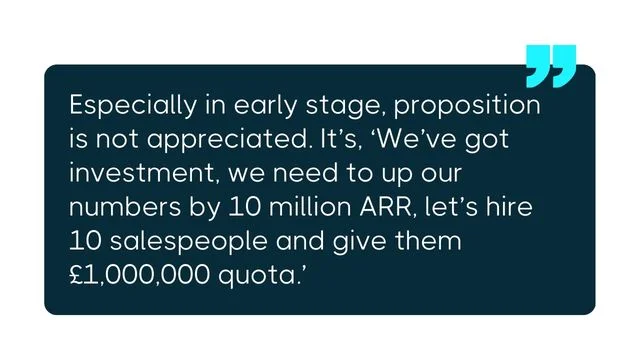
When growth targets rise or investor pressure builds, the instinct can be to add heads into sales and hope that momentum follows, but this rarely works without the foundations in place.
It's important to know that those foundations are not just a strong product, they are:
- A clearly defined proposition
- Realistic pricing
- A well-understood customer persona
- A shared understanding of the problem the business is solving
This allows a clear, connected go-to-market strategy from the offset, ensuring consistent messaging across every touchpoint.
As one GTM leader said, “A successful GTM team can be identified when the person nearest to the customer has to do the least amount of work. They don’t have to be a man of steel to sell anything, they’re just taking orders because the proposition is so perfect, because the delivery is so perfect.”
More salespeople do not equal more sales
More salespeople can feel like the fastest route to growth, but headcount can simply amplify the confusion. If each person is interpreting the proposition differently, speaking to the wrong audience, or handling objections in inconsistent ways, growth stalls.
One GTM Leader shared a clear example of this, where the founder could sell successfully because they had built the business and knew the story inside out. However, the team around them could repeat it.
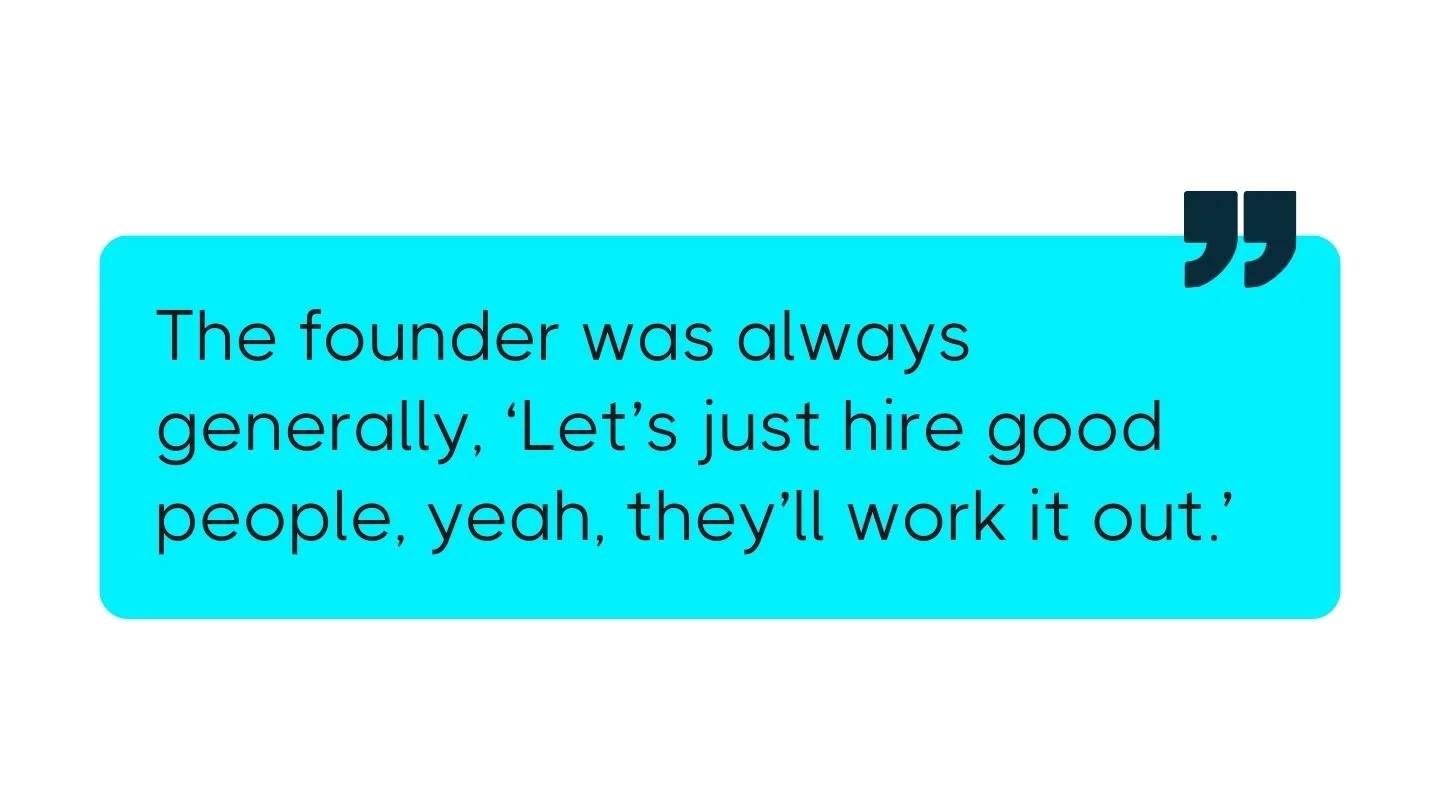
Good people were coming in, but the business was still struggling. The problem was not talent, it was enablement. New hires were being asked to sell without enough clarity on who they were selling to, how the proposition should land with different customer types, or how to respond when buyers pushed back.
A strong proposition enables strong hires
A clear business proposition also benefits businesses from a hiring perspective. When considering new roles, senior talent is assessing your business for its potential. They need to know they can see a successful future for themselves and for their future team members in your company.
Bradley shared, “When I’m approaching Sales Leaders, the businesses that are being recognised are the businesses that have their ICP, have their proposition, have their team worked out as much as they can.”
Clarity is not only what helps your existing team perform. It also makes your business more attractive to strong GTM talent in the first place. The best people do not just want a title or a target; they want confidence that the business has enough focus for them to succeed.
Hiring for stage, not status
Businesses often confuse the hire they want to announce with the hire they actually need.
In practice, that usually means reaching too quickly for a big title (CRO, CSO, Chief Commercial Officer), because it signals ambition, maturity or scale. However, in many early-stage or evolving businesses, the wrong senior hire can slow progress rather than accelerate it.
Key takeaway
The best first GTM hire is not always the most senior one. It is the one that matches the reality of the business today.
For some companies, that may well be a Chief Revenue Officer, but for many, especially in early-stage or transition periods, the better hire is often:
- more hands-on than strategic
- more comfortable with ambiguity than structure
- more focused on building than managing
- more interested in outcomes than titles
Hiring for status can feel like progress, but hiring for stage is what actually gives a business a chance to grow.
Candidate experience matters
When you’re engaging someone to lead a growing start-up, they must be comfortable working within ambiguous, experimental environments.
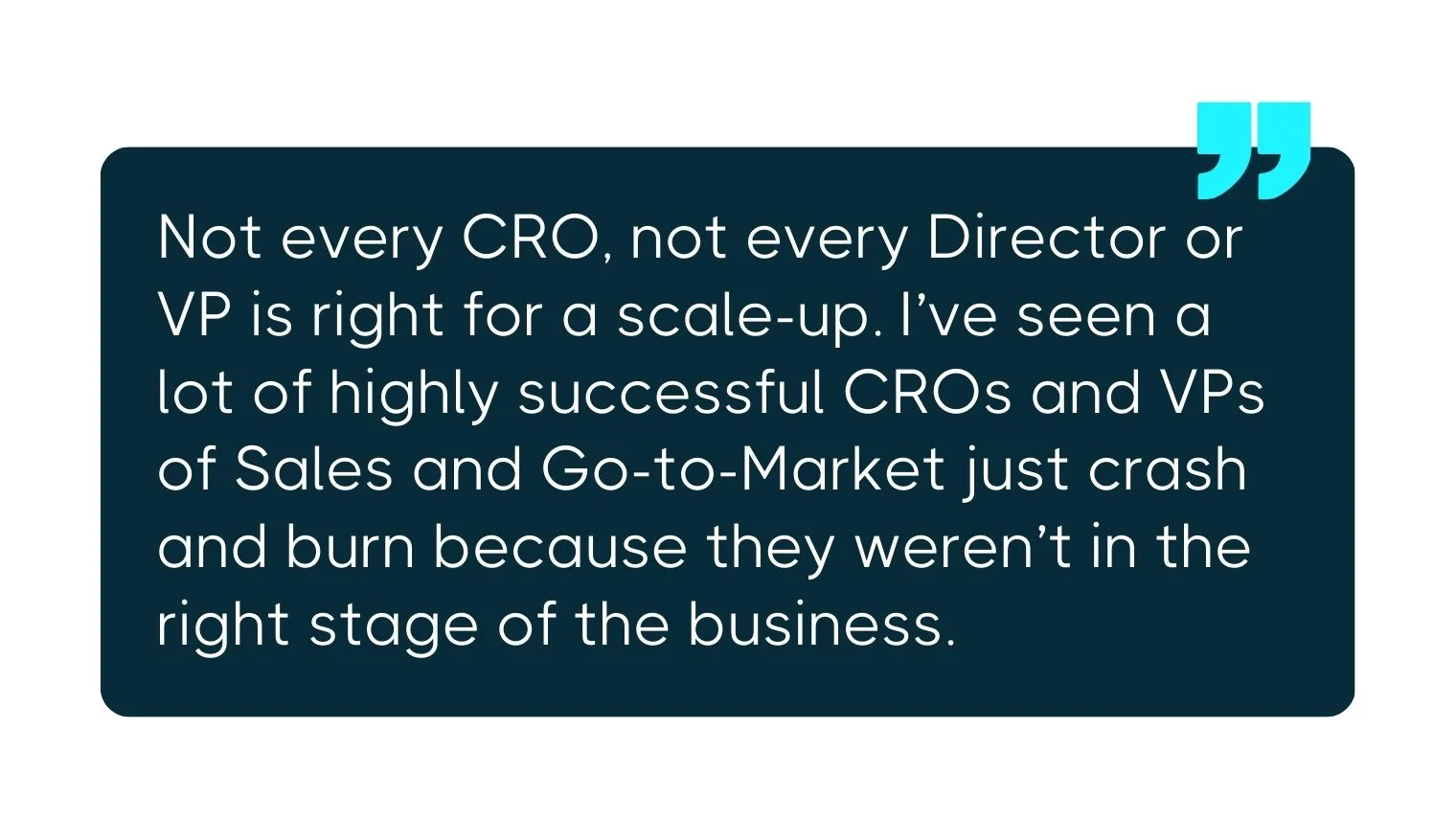
While someone from a larger, recognisable organisation might hold a lot of gravitas, they’re often not the right person for this stage as they are accustomed to working with greater structure, resource and funding. In summary, “Big names, don’t mean success.”
Engaging the right job title
As mentioned above, businesses can often be quick to jump to senior job titles and impressive CVs. This has been a particular challenge seen by our Search Partners over the past 18 months. Bradley shared, “The amount of clients that I’ve sat in front of that have said we need to hire a CSO. By the end of the conversation, we deduce they need a Sales Director.”
The “default” senior hire is not always the right answer. In many cases, what a business really needs is not a strategic figurehead, but a builder.
Bradley advises that many early-stage companies need a glorified salesperson that wants to take that next step without a team to manage, without a P&L to report. Simply, “You need somebody that is willing to roll their sleeves up.”
Build your team around the problem, not the product
Too many go-to-market teams still lead with what they sell, rather than why the buyer should care. In stronger markets, that might have been enough, but buyers have changed. They are better informed, more selective, and less willing to sit through generic product-led pitches.
Pitches being too product-heavy is a common weakness in technology sales, where teams assume the product itself is the answer without being clear on the business issue behind it. Salespeople often say a solution “will solve the problem” without really knowing why, or what outcome the customer is actually trying to achieve. This is costing sales.
Key takeaway
A world-class GTM team does not begin with a perfect pitch deck or a sharper demo. It begins with a much harder discipline: understanding the customer problem well enough to make the product feel relevant.
That means understanding:
- What is the buyer actually trying to fix?
- What happens if they do nothing?
- How does this problem show up commercially?
- Why should they care now?
- How should the proposition change by persona or market?
In crowded markets, product knowledge might get you into the conversation, but problem-led selling is what makes people listen.
Good selling has changed
It is no longer enough to know the product and walk through a demo. Buyers want relevance much earlier in the conversation - they want to feel understood. They want someone who can frame the problem clearly and not just describe functionality. As such, go-to-market teams must be able to answer:
- What’s the problem we’re trying to solve?
- Why do they need that technology?
- What is the client problem you’re trying to solve?
Those questions separate an average GTM team from a stronger one.
Buyers are better informed than ever before
Historically, sellers had more control because they held more information. That competitive advantage has largely dissipated, as buyers often arrive to pitches already informed, already comparing options, and already aware of category language.
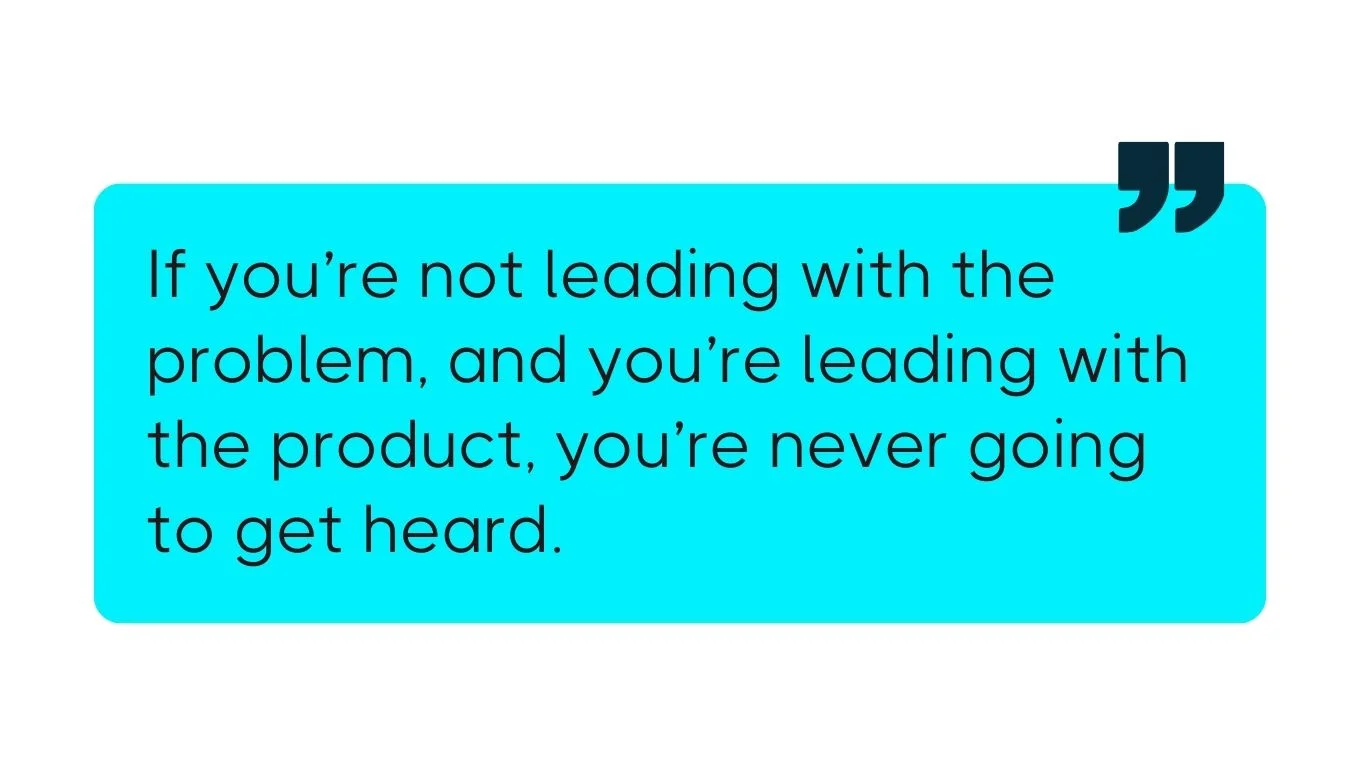
That changing buyer dynamic explains why product-led messaging has become less effective. When every provider sounds similar, feature lists blur together. The teams that cut through are the ones that sound closest to the buyer’s actual reality.
How buyer behaviour influences GTM team design
Another significant change that tech companies must contend with is that buyers no longer want to speak to a salesperson in the traditional sense. Often, they want to speak to the person who can actually help solve their issue.
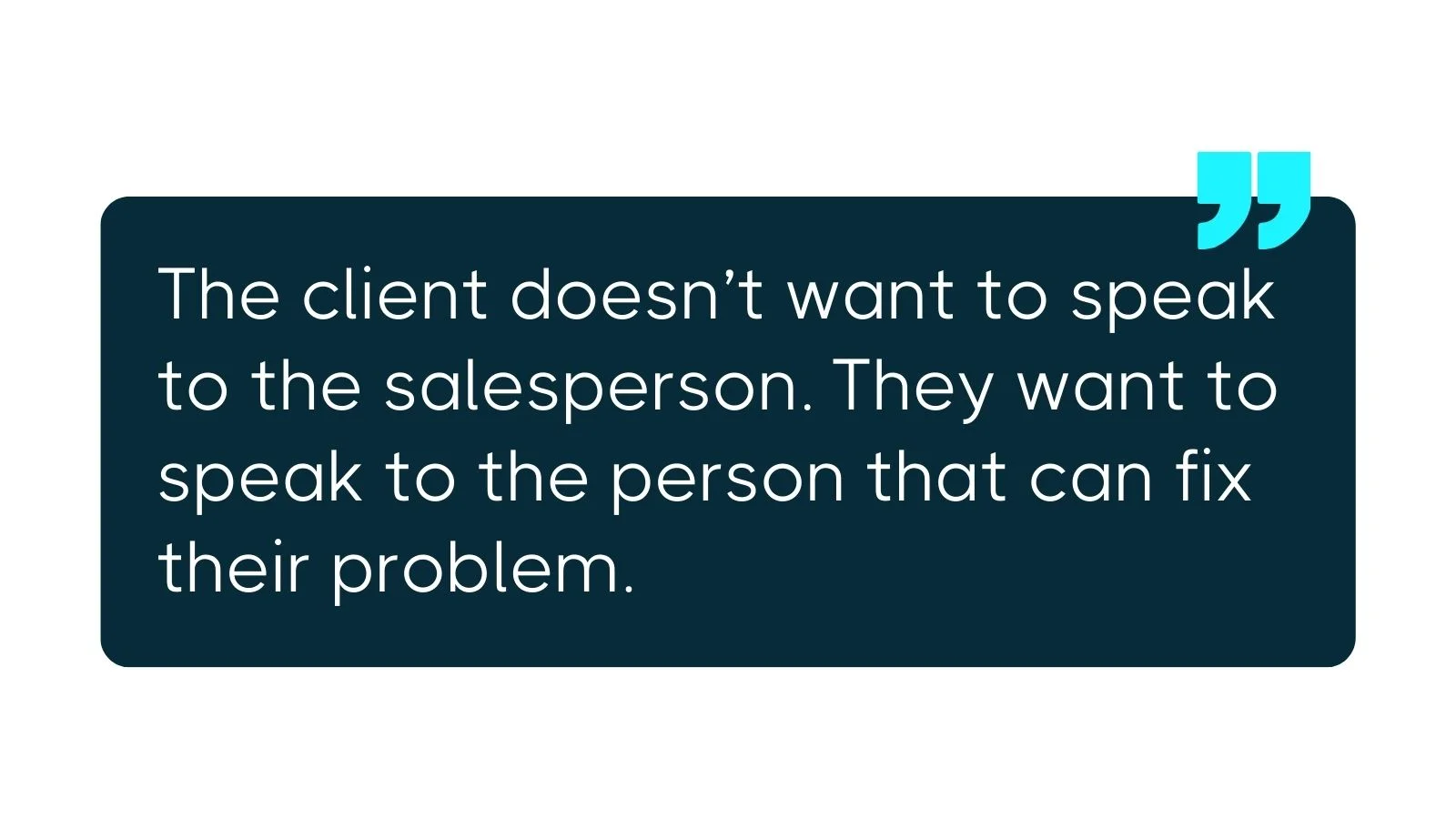
Ultimately, customers do not see a sales rep as an expert. As such, the best go-to-market teams are not built around polished pitches alone, they are built around credibility, relevance and access to expertise.
A successful GTM team requires thoughtful planning
This roundtable event clearly exposed the realities of building a successful go-to-market team. The technology founders and GTM leaders in the room clearly described the level of strategic planning required for identifying, hiring and training the right people to enable growth.
How 3Search Executive can support your growth
At 3Search Executive, our technology search partners will leverage their in-depth knowledge and take on an advisory role to ensure you’re engaging the right profiles for your organisation. Whether you’re appointing a single leadership hire or beginning an entire team build, our unique approach to hiring – Advise, Attract, Develop – will ensure you meet the right talent for your company.